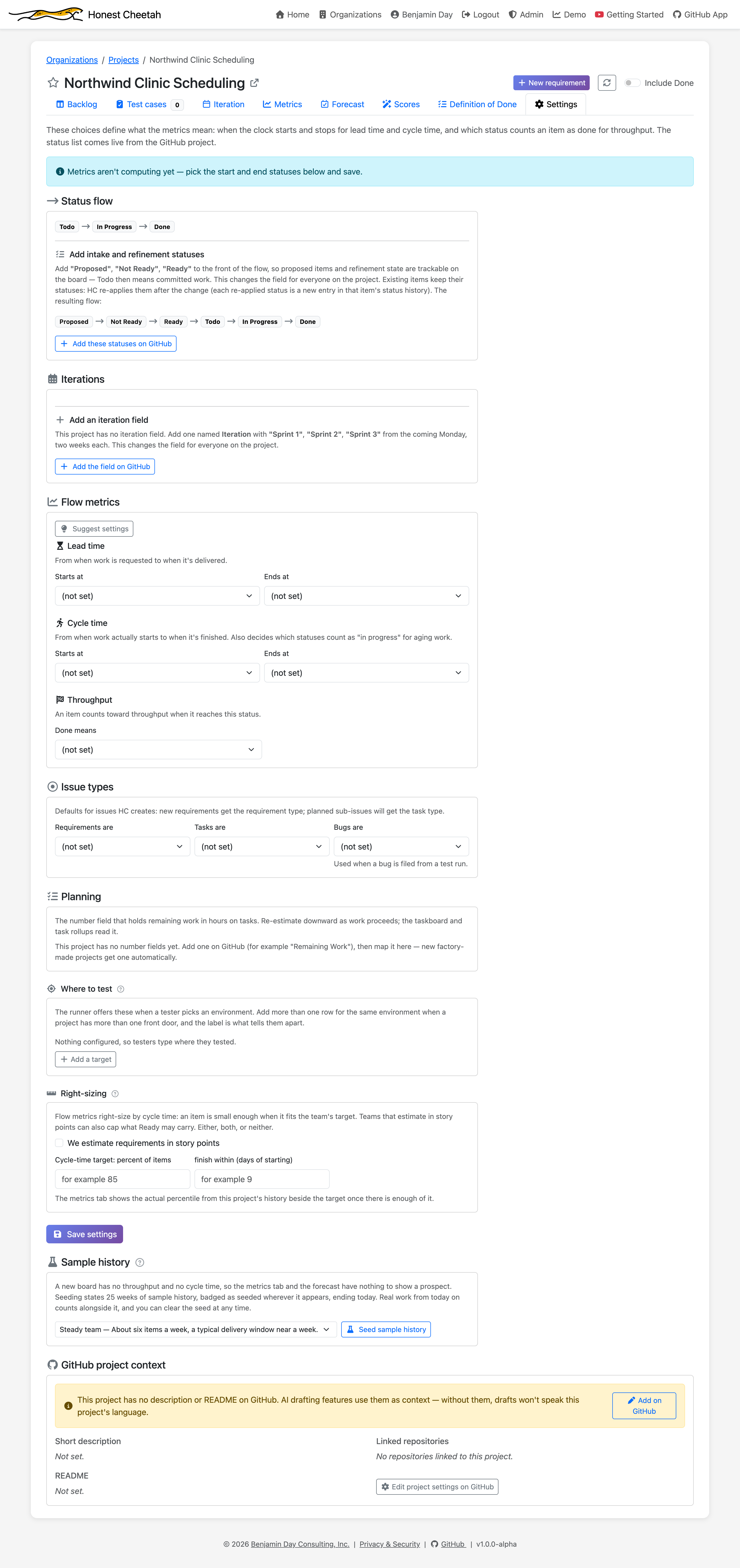
GitHub has an iteration field. It doesn't have a sprint.
Honest Cheetah turns the field into a page: what's in this iteration, how the tasks under each requirement are going, how many days are left — and which iteration everything else will probably land in.
Iterations are GitHub's. Honest Cheetah reads the field, writes to it when you tell it to, and never rewrites your schedule behind your back. If your board has no iteration field yet, HC offers to create one with the cadence you pick.
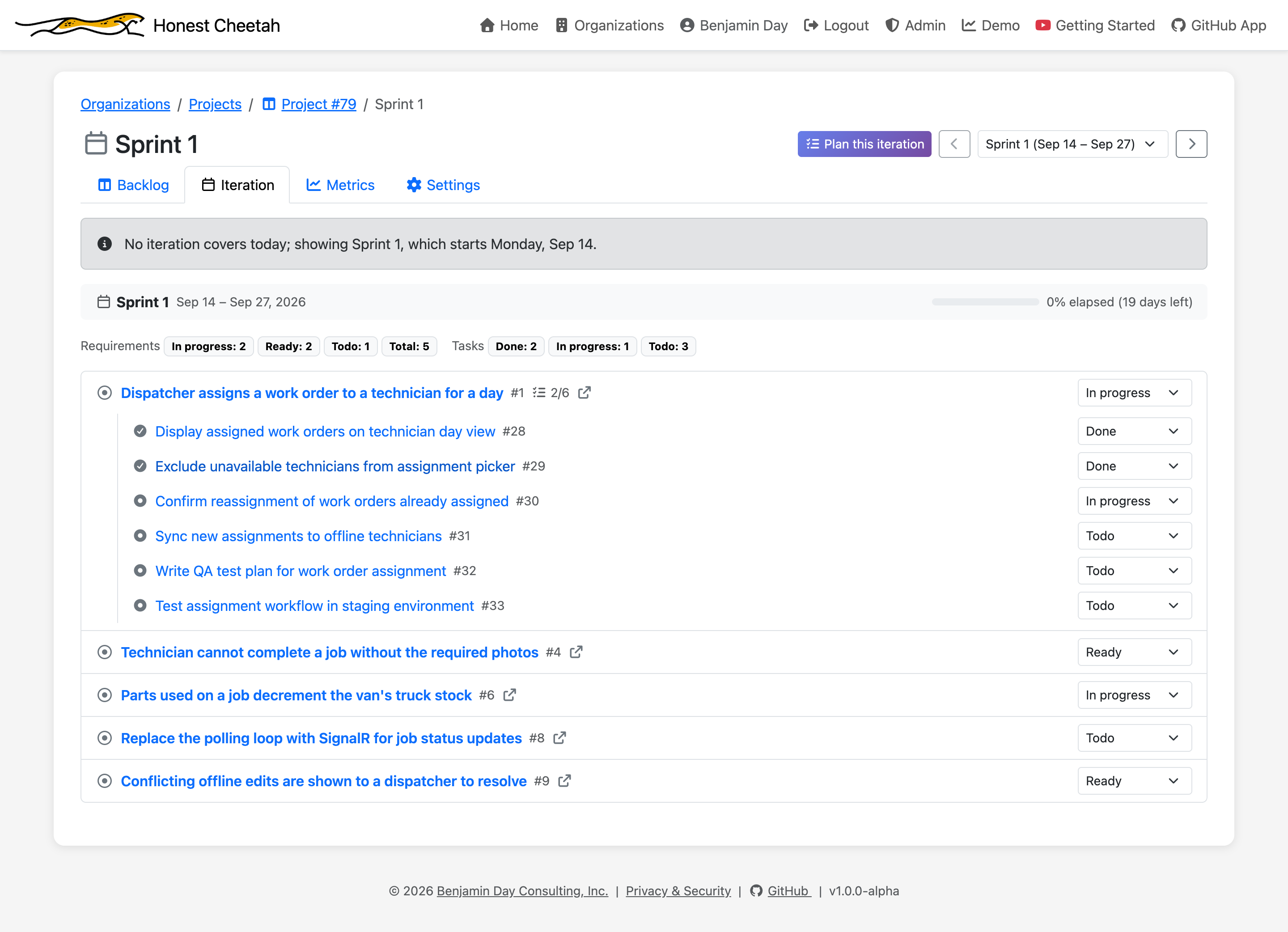
The iteration page
One iteration, one page. Requirements with their tasks nested beneath, status counts at both levels, an elapsed bar with the days left, and a picker to move between iterations. If no iteration covers today, the page says so and shows you the next one.
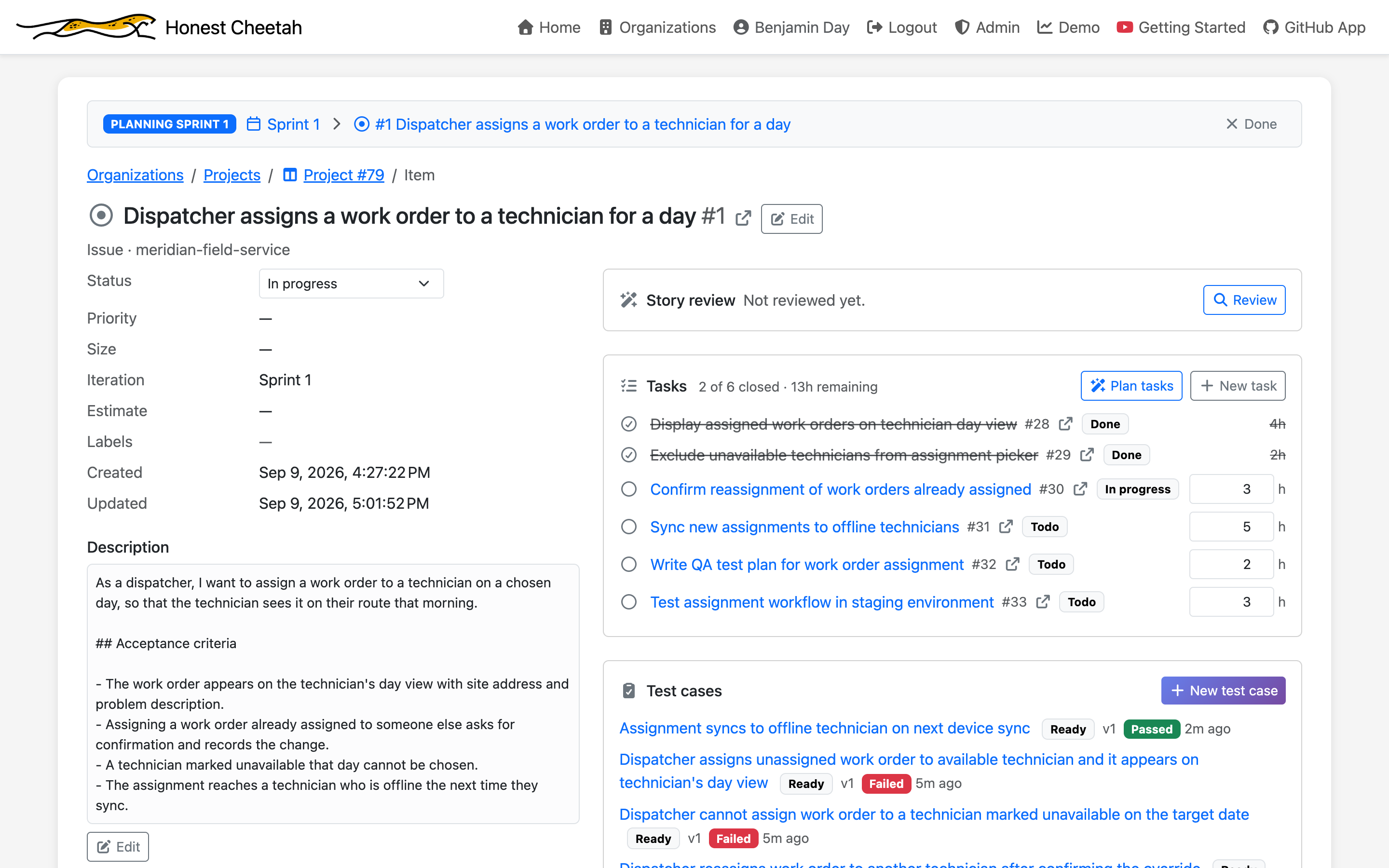
Planning mode
Click Plan on an iteration and the app follows you. A bar under the breadcrumbs says which iteration you're planning; open a requirement from it and the bar comes along; Done when you're finished. It's a small thing that stops you assigning work to the wrong sprint because you lost track of which one you were in.
On the backlog, check the items you want and move them into an iteration in one go. The picker defaults to the next one.
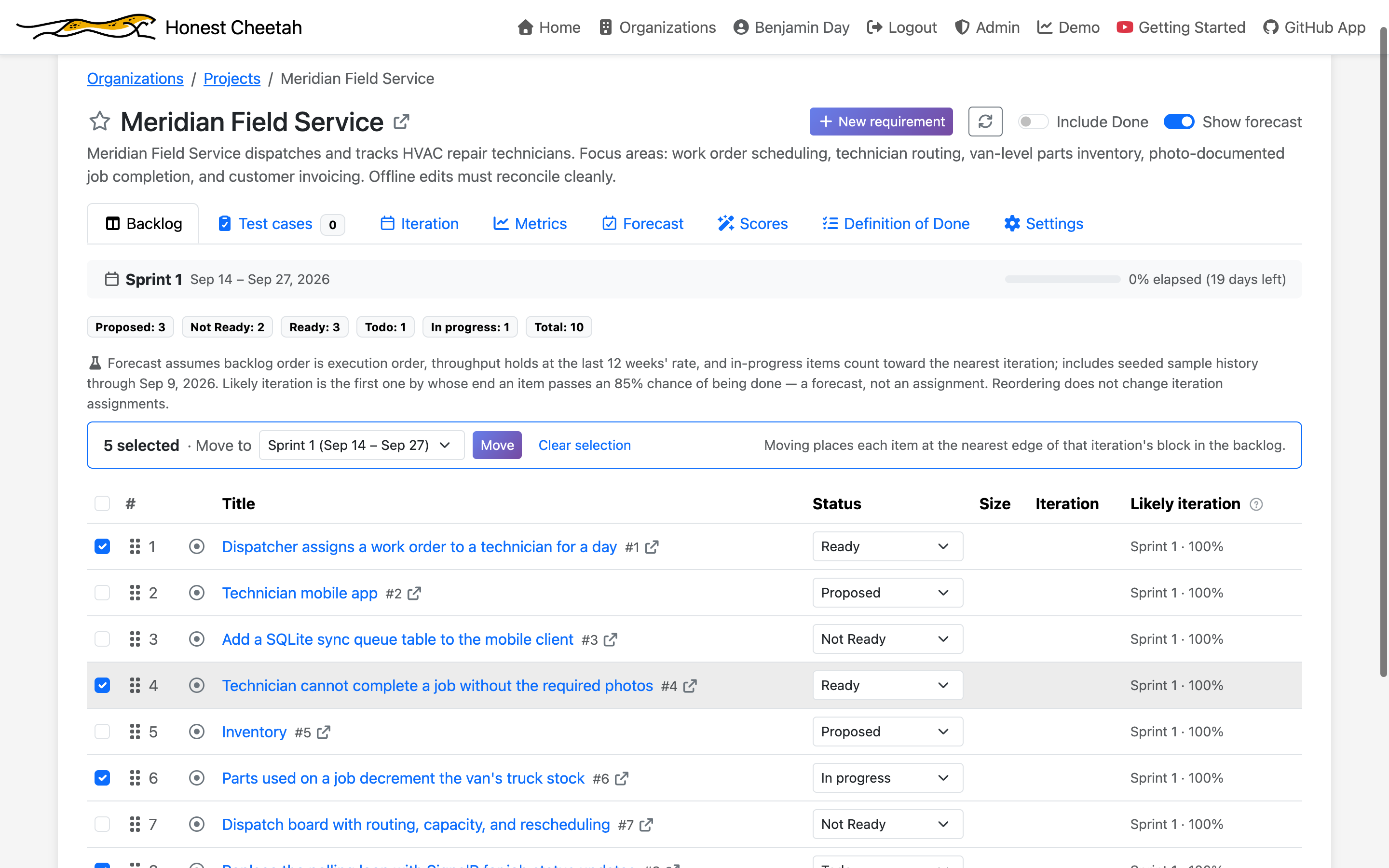
Where will it probably land?
Turn on Show forecast and the backlog gets a Likely iteration column. For each item, it's the first iteration by whose end that item has at least an 85% chance of being done — given its position in the backlog and a Monte Carlo run over your throughput. An assumptions line above the table says what the forecast is based on, including whether any of the history is seeded.
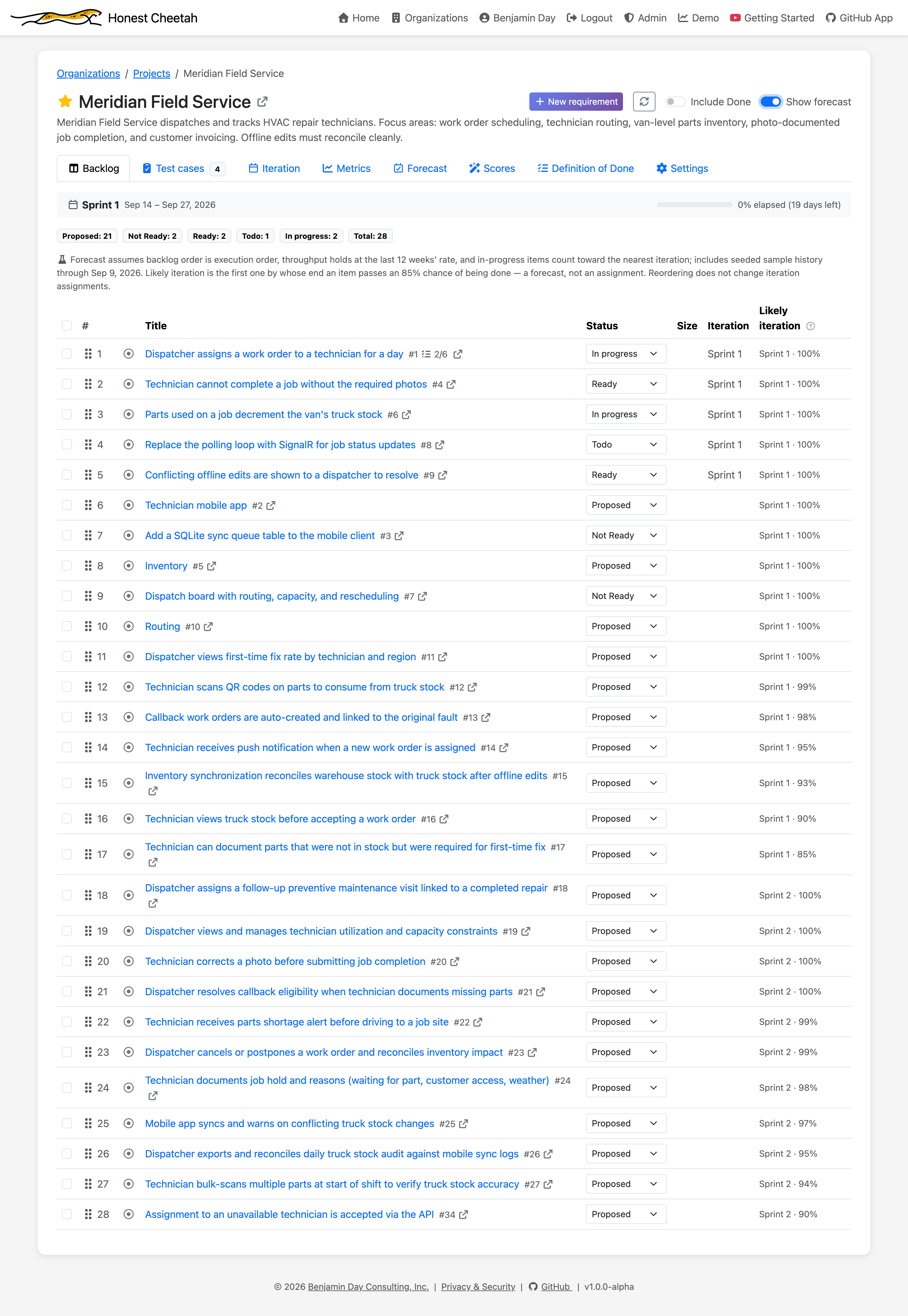
This is the honest answer to "when will #17 be done?" — a sprint and a confidence, computed from how fast you've actually been going. It is not a promise, and it changes when the order changes.
Definition of Done
Write yours once, per project. Four categories; each item is Required, Optional, or Proposed. Start from a template and edit.
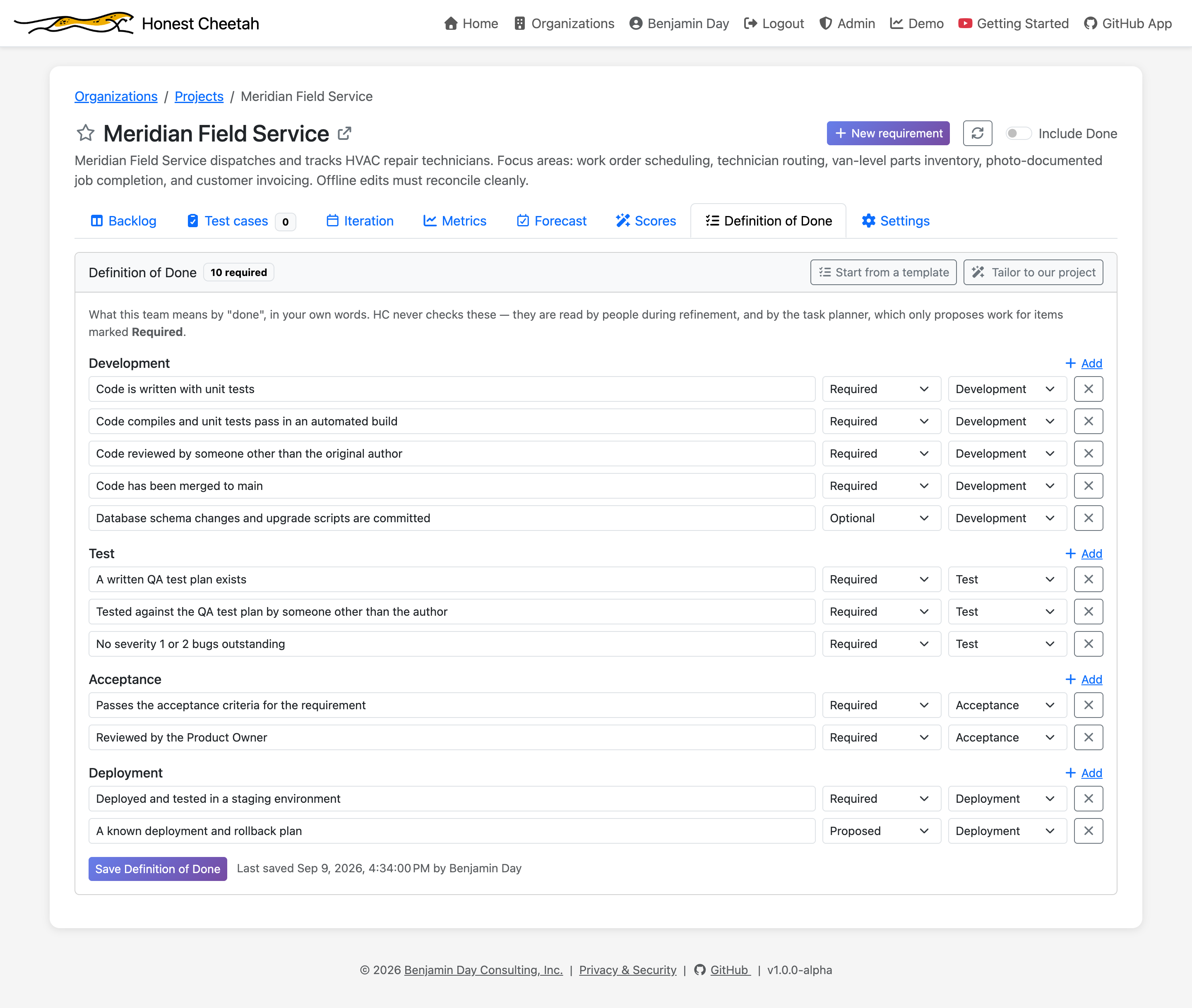
Honest Cheetah reads it when it plans tasks for a requirement — so the "write the deployment note" task shows up because your DoD says it should, and says so. HC doesn't grade anything against it. Done is still a judgment your team makes.
Setting up iterations
On a board without an iteration field, Settings offers to add one — you pick the cadence and start day, HC creates the schedule. On a board that already has one, HC leaves the schedule alone and points you at GitHub's own field settings when you need more iterations, because rewriting a live schedule through the API clears every assignment on it. Some things GitHub should keep doing.