The AI proposes. You dispose.
That's the rule, and there are no exceptions to it. Here's what that means in practice, because "AI-powered" is doing a lot of work on a lot of websites right now.
Four rules
Every output is a draft
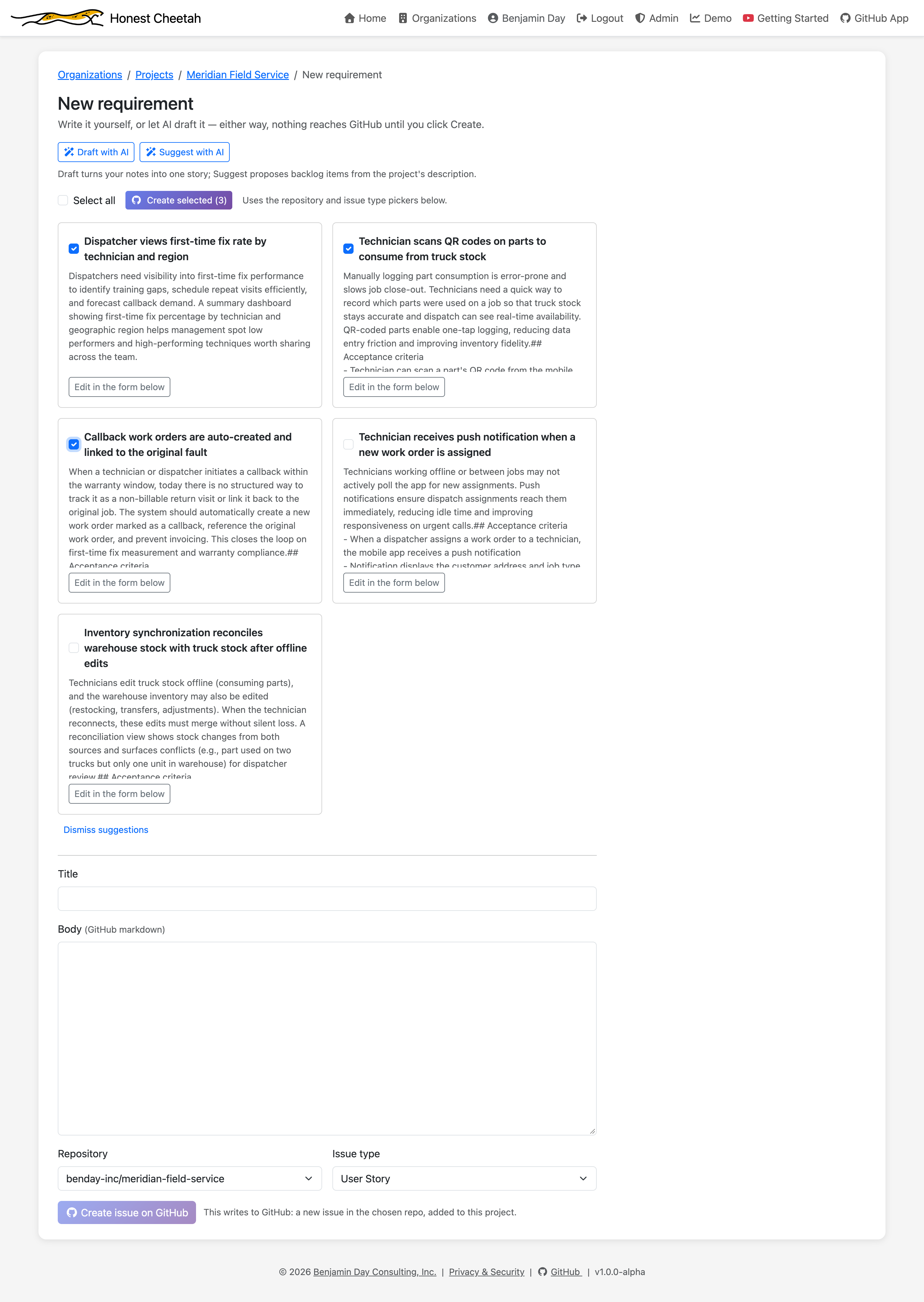
Suggested requirements, drafted test cases, a proposed split, a rewritten story, a task breakdown: each arrives as something you can edit, select from, or close. The AI never has the last word.
Nothing reaches GitHub without a click
Every write to your board is a button you pressed. HC doesn't have a background agent that edits your issues, and it isn't going to get one.
The model never does arithmetic
Metrics and forecasts are deterministic code. When the AI explains your numbers, it's narrating figures HC already computed. It doesn't get to make any up.
Usage is capped per organization
Each GitHub org gets a monthly AI budget with a hard ceiling. When it's spent, the AI buttons stop until next month and everything else keeps working. No surprise bill, ever.
What it reads
The AI works from your project's description and README, any agent instruction files in the repository (AGENTS.md, CLAUDE.md, copilot-instructions.md), and the requirement in front of it. That's it. It doesn't crawl your code, and it doesn't see other organizations' data.
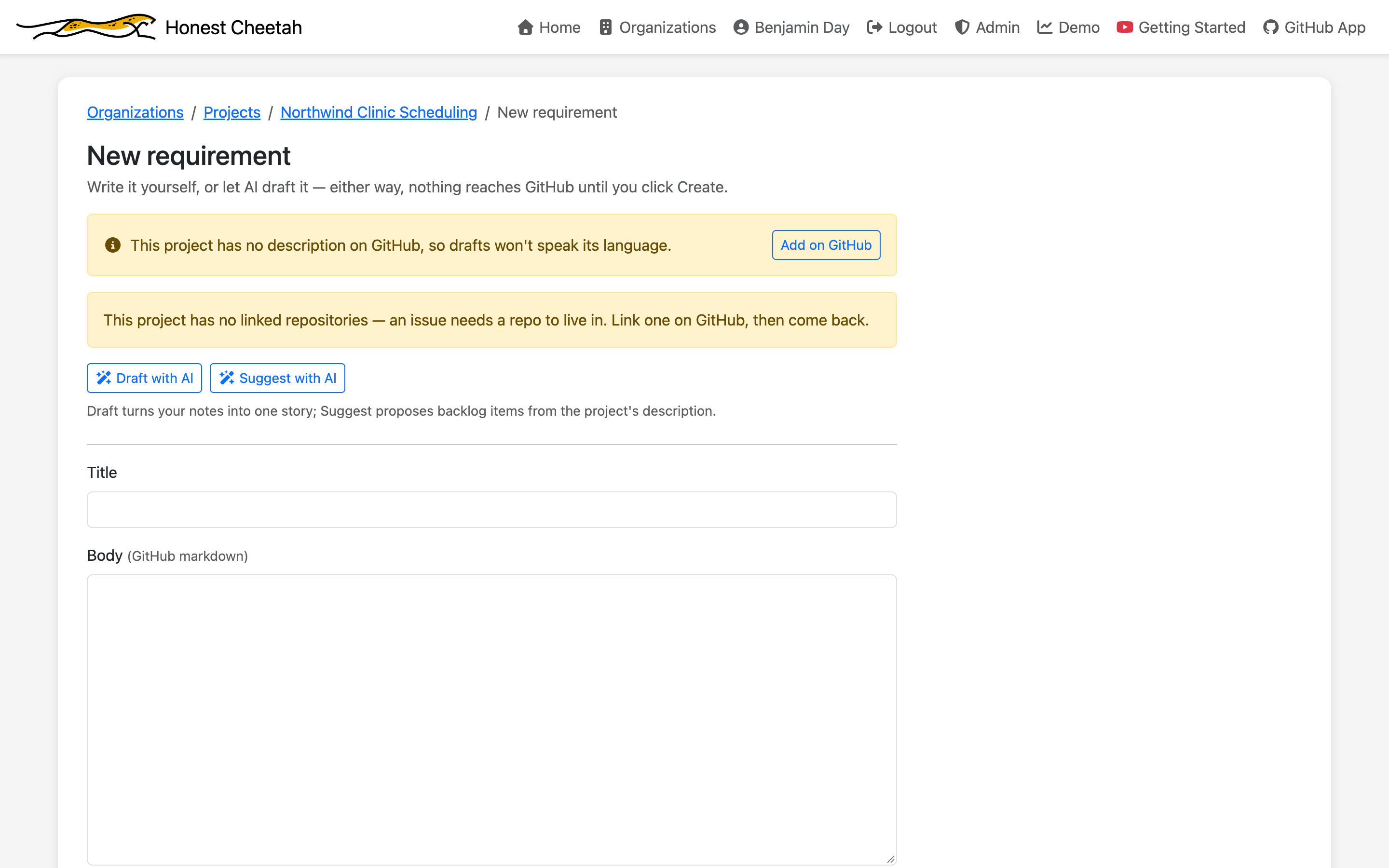
A board with no description gets told so before anything is drafted, because a draft with no context is a generic draft, and you'd notice.
What it does
- Review a story for whether a tester could tell what passing means, and offer a fix.
- Split a too-big story, add acceptance criteria, or reframe a task as a story.
- Draft a requirement from notes, or suggest a batch from the project itself.
- Propose a task breakdown for a requirement, with estimates and reasons.
- Draft test cases for a requirement.
- Explain the metrics in plain English.
- Suggest which of your statuses mean "started" and "finished," when the deterministic guess isn't sure.